
Ceva Launches Service To Highlight The Cost Of Infertility Linked To Q Fever
 1 year ago
  5335 views
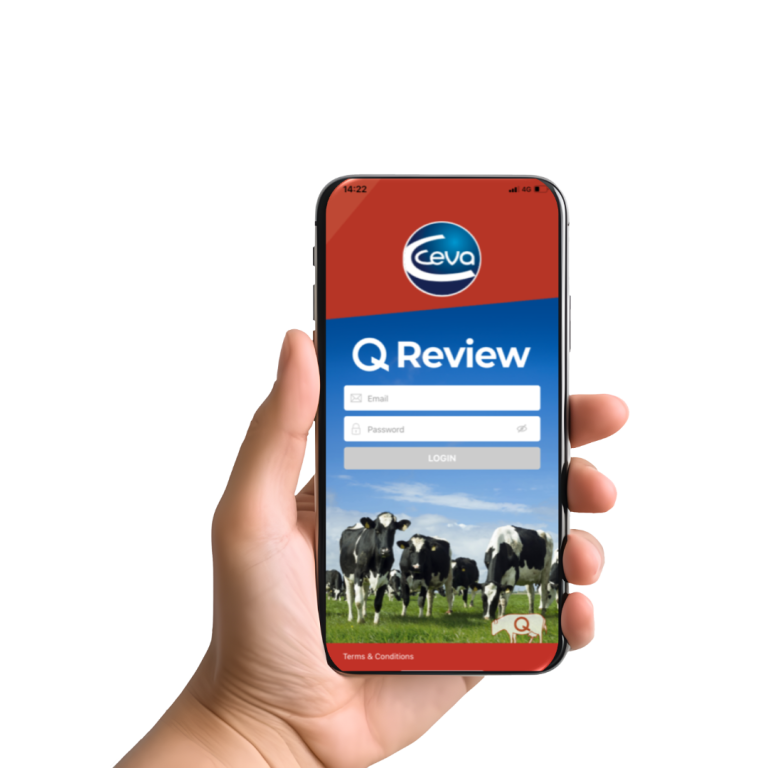
Ceva Animal Health, the manufacturer of the Q fever vaccine Coxevac, has launched an innovative new service called Q Review to provide vets and farmers with a snapshot into costs associated with fertility issues in dairy herds linked to Q fever.
The useful new service is free of charge to vets and can be used by Ceva representatives during practice visits to help assess an individual herd’s fertility in comparison to industry averages and targets. Suitable for all year round (AYR) dairy calving herds in the UK, the service uses a unique app solution based on robust data sources including the NMR 500 Herd Report1 and Kingshay Dairy Costings2. It can be used for herds that have not yet tested for Q fever but are experiencing clinical signs of the disease including increased pregnancy losses and metritis, as well as more subtle fertility issues such as increased days open. It can also be utilised in those that have tested positive but are not yet vaccinating to review a herd’s progress.
Providing useful information as a benchmark to generate discussion around the cost of infertility in AYR dairy calving herds, the app collects information on herd disease status, vaccination status and fertility status to provide a traffic light colour-coded review demonstrating where the herd is against industry standards.
The results will show the financial cost of fertility issues to the individual farm, the industry average cost and calculate the difference between the two. It also demonstrates the specific costs of fertility split between abortion, metritis, endometritis, retained placenta, extended calving intervals per day, weak newborns/stillbirths and culling due to fertility issues.
Katherine Timms, BVetMed (Hons) MRCVS, ruminant veterinary advisor at Ceva, comments: “The new Q Review app will provide vets with extensive herd-specific information to aid further discussions with the individual dairy farmer on herd selection for diagnostics and the benefits of vaccination with Coxevac. It will also encourage farmers to boost year on year by showing improvements post vaccination.”
Chris Butterworth, veterinary surgeon at Peakfield Farm Vets in Derbyshire, adds: “We first used Q Review in 2024, inputting data from our dairy farms to see how they compared to each other and the industry average for several key parameters. It highlighted those that might not be performing to the level we would hope, allowing us as a practice to discuss possible reasons for this. We generally followed this up with a Q fever test to see if the disease was present and perhaps having a negative impact on the fertility data. Some of these came back positive for Q fever, again giving us plenty to discuss in terms of further diagnostics and potential vaccination.
“In 2025 we repeated the process, allowing us to compare the data for our clients year on year, and to see whether vaccination was producing a benefit in vaccinated herds. Q Review has been a great support tool offered by Ceva that helps us identify farms with fertility issues, giving us a clear report which includes the financial impact of poor performance around fertility.”
For further information contact your local Ceva territory manager or visit www.qfever.co.uk.
References
- NMR 500 Herd Report 2024: Hanks et al. 2024 Key performance indicators (KPIs) for the UK national dairy herd - A study of herd performance in 500 Holstein/Friesian NMR recorded herds for the year ending 31st August 2023
- Kingshay Dairy Costings 2024 Kingshay's Dairy Costings reports track the financial performance of dairy farms, including factors like herd size and milk production costs.
More from Ceva
- BLUEVAC-3 bluetongue (BTV-3) vaccine available
- Pet owners told to ‘prepare now’ as vets warn of seasonal stress trigger
- Why is my cat meowing so much? Feline behaviourist explains why cats become more vocal during spring
- Ceva hosts feline hypertension bitesize video series
- Vets and VNs urged to take blood pressure in cats
