
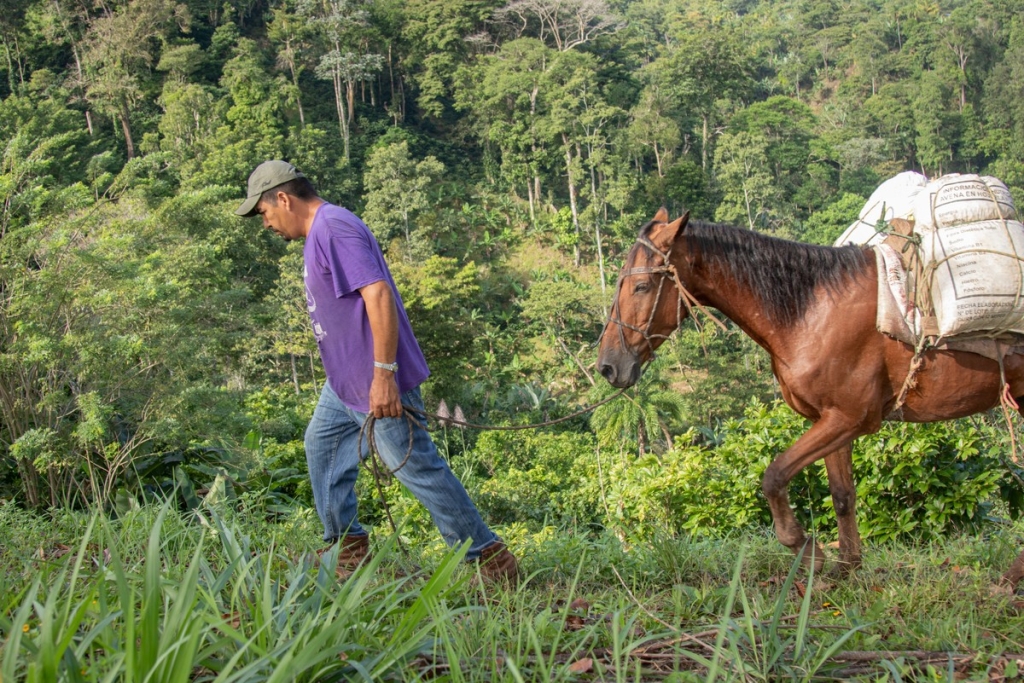
Horses and mules are essential to coffee and cacao production in many countries - particularly Nicaragua (credit: Brooke).
Horses Bring Brits’ Christmas Coffee And Chocolate – But What About Their Welfare?
 9 months ago
  786 views
As the UK heads into peak coffee and chocolate season in the run-up to Christmas, consumer research reveals that while Brits care deeply about ethical sourcing, most remain unaware of the hidden role horses and mules play in getting their favourite treats from farm to shelf.
A new YouGov poll commissioned by international working animal charity Brooke reveals a gap between consumer intention and industry transparency - sparking fresh calls to ensure the UK’s booming coffee and cocoa imports do not come at cost to animal welfare.
Brits care - but don’t know the whole story
While 77% of GB adults say they’re aware of where their coffee comes from, and 74% say the same for chocolate, fewer than 6 in 10 (59%) know that animals are routinely used to transport coffee cherries and cacao pods in producing countries.
Awareness drops even lower among 18–24s (55%), despite the demographic being among the fastest-growing consumers of barista-made coffee.
Crucially, concern is high:
82% say animal welfare standards are important when buying coffee or chocolate.
85% prioritise fair wages for farmers.
65% would pay more for coffee and/or chocolate products guaranteeing good animal welfare during transport.
Over 55% would support an “equine-welfare” stamp on their coffee or chocolate.
Women (71%) and younger adults (25-34 years, 72%) are the most willing to pay more for animal-friendly certification.
The untold story behind beans and bars
Horses and mules are essential to coffee and cacao production in many countries - none more so than Nicaragua, one of the world’s top 15 coffee-producing nations and the largest cacao producer in Central America. In remote areas where transport is unaffordable or impractical, working equines remain the only way to move produce from mountainous farms to central collection points.
But long hours, steep terrain, heavy loads and limited access to veterinary care mean the animals are often at risk of injury, exhaustion and preventable disease.
Brooke’s Global Head of Policy and Advocacy, Anna Marry, said: “Without horses and mules, much of the coffee and cacao exported globally simply couldn’t reach markets.
“These animals are the invisible workforce behind products Brits enjoy every day. The good news is that with training, veterinary access and simple changes in handling, working equines can live healthier lives - and farmers can increase productivity.
“Brooke is helping to improve this in Nicaragua right now, and we ask consumers to support animal-friendly brands and retailers as best they can.”
Brooke’s impact: from overworked to thriving
Brooke has partnered with Nicaraguan farming communities to improve harnessing, load management, veterinary access and sustainable business skills.
Case studies include:
Farmer José and his son Lester transformed the welfare of their horse El Rojito after Brooke’s training, shifting from heavy, traditional practices to gentle, trust-based care supported by regular vet treatment. This keeps both animals and coffee production healthier.
Irma and her husband Eliú have improved the welfare of their horse Azul Azu (essential for transporting their cacao and supporting the family’s daily life) after Brooke-supported training helped them adopt gentle, preventative care that keeps both the animal and their livelihood thriving.
Why now? A critical moment for transparency
The UK is experiencing a coffee consumption boom in 2025, with sales of speciality blends and at-home machines hitting record highs. At the same time, UK shoppers are demanding clearer labels, and the food sector is under pressure to demonstrate ethical supply-chain standards.
With Christmas approaching - a key sales period for chocolate, speciality gifting, and premium coffee - Brooke is calling on retailers and manufacturers to:
- Acknowledge the role of working animals in their supply chains.
- Adopt and promote best-practice animal welfare, including humane load limits and access to trained animal health workers.
- Provide clearer labelling so consumers can consciously choose welfare-guaranteed products.
What consumers can do:
- Look for ethical or animal welfare certifications on chocolate and coffee product labels.
- Support brands actively investing in animal welfare in their supply chain.
- Back Brooke’s work, which equips farming communities with the skills and tools needed to protect working equines.
- Ask retailers how they ensure animal-friendly transport of coffee and cacao.
- Consider purchasing organic products, why typically include higher animal welfare standards.
ENDS
Contact [email protected] for media opportunities.
Brooke can provide:
Interview opportunities with Brooke’s Global Head of Policy and Advocacy, Anna Marry.
Case studies featuring farmers and equine health workers.
B-roll and stills from Nicaragua showing horses at work and community training.
ENDS
Notes to Editor:
All figures, unless otherwise stated, are from YouGov Plc.
Total sample size was 2091 adults. Fieldwork was undertaken between 5-6 August 2025. The survey was carried out online. The figures have been weighted and are representative of all GB adults (aged 18+).
Brooke Action for Working Horses and Donkeys is a U.K. based, global animal health and welfare charity that gives working horses, donkeys and mules a life worth living.
Over 100 million of these animals pull carts, carry goods and work the land, earning an income that around 600 million people rely on to put food on their tables, earn a living and send their children to school. Sadly, many of them are suffering, so Brooke works with owners, communities, service providers, governments and international organisations to make long lasting welfare improvements.
Brooke was founded in 1934 when Dorothy Brooke, a British woman, sought out war horses that had been left in Cairo after the First World War. With support from an appeal letter in the Morning Post newspaper, she set up the Old War Horse Memorial, which became Brooke, and expanded across Africa, Asia, and Latin America.
Website: www.thebrooke.org
Facebook: thebrookecharity
Instagram @thebrookecharity
TikTok @brookecharity
More from Brooke
- Unseen experts: Women remain sidelined despite being leaders on pandemic prevention
- Brooke and the Worshipful Company of Farriers launch farriery award
- Learning in the digital era: Empowering vets in developing countries
- Charity urges compassionate treatment of donkeys after Santorini reality TV scenes
- Actress Annette Badland appointed Women's Ambassador to raise awareness on gender equality issues in working animal communities

 22 hours ago