
Brooke West Africa Study Results Revealed
 8 years ago
  2198 views
A study conducted by Brooke West Africa has revealed that unpaid services carried out by horses, donkeys and mules in Senegal amount to an average of £533 (395,000 FCFA) per family each year, on top of the average paid income of £327 (243,000 FCFA). The services within the study included family transport and loans to neighbours.
Carried out across urban areas, the groundnut basin and in the Ferlo, the study looked at the contribution of working equines to the Senegalese economy. The results confirmed the country’s heavy reliance on equines within agriculture, transport and households.
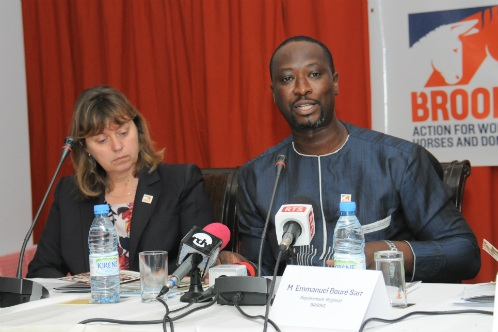
The results of the study were presented at a ceremony on June 21 attended by the Minister of Livestock and Animal Productions, Aminata Mbengue Ndiaye, the UK ambassador, Georges Hodgson and Brooke CEO Petra Ingram.
The study also confirmed the dependence on equids in the groundnut basin region, where agricultural communities primarily produce peanuts, millet, and cowpeas. It was found that an absence of equines to pull carts, seeders and hoes would result in a decrease in production and income.
Outside of agriculture, equids were found to have made a strong contribution to urban development. Here, many people relied upon horse-drawn vehicles as a source of employment. With urban incomes generally higher than the minimum wage for manual workers, equines also offered an opportunity to some rural people to obtain additional income in the dry season by traveling to work in towns.
Speaking at the ceremony, Brooke CEO Petra Ingram said: “These invisible workers are the driving force behind rural development and also contribute to urban development. They live in the cities and the countryside and are in charge of agricultural work, the transport of people, the transport of goods, the transport of construction material and other household products. Unfortunately, they suffer from pain, stress and disease and are not very visible in development policies and programmes.”
Brooke West Africa covers Senegal and Burkina Faso, where over 2 million horses, donkeys and mules are currently working in punishing environments. Brooke’s aim is to improve the welfare of 150,000 working equines in the region by 2021, through education and advocacy.
More from Brooke
- Unseen experts: Women remain sidelined despite being leaders on pandemic prevention
- Brooke and the Worshipful Company of Farriers launch farriery award
- Learning in the digital era: Empowering vets in developing countries
- Charity urges compassionate treatment of donkeys after Santorini reality TV scenes
- Horses bring Brits’ Christmas coffee and chocolate – but what about their welfare?
