
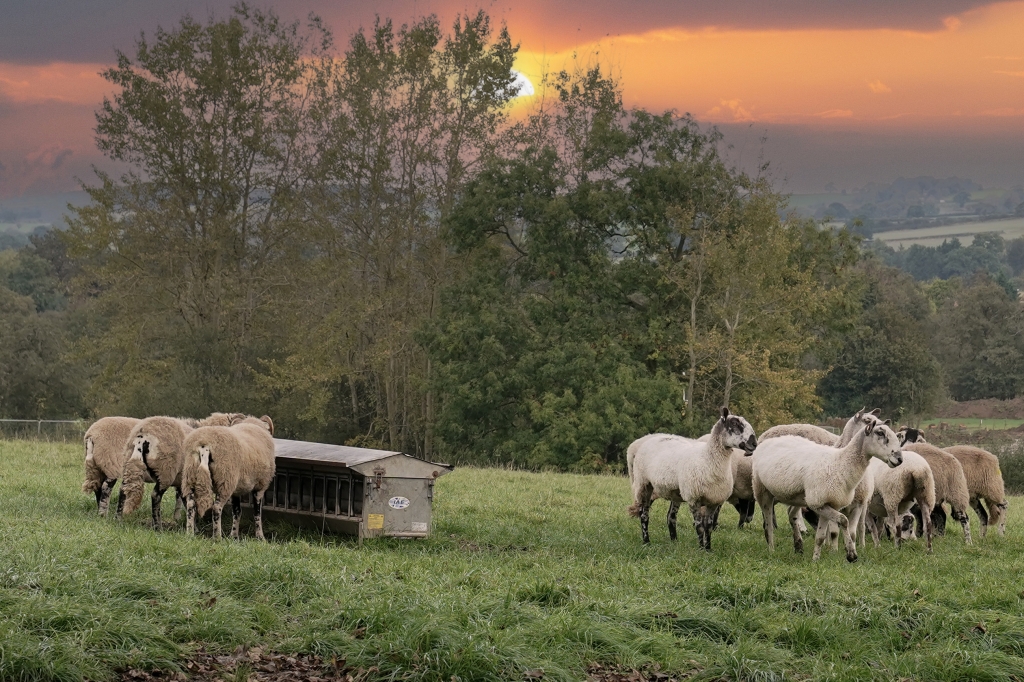
A range of targeted products are available to help protect ewes and their unborn lambs
Government Data Highlights Winter Risk Of Trace Element Deficiencies In Ewes
 9 months ago
  761 views
Trace element deficiencies during winter consistently rank among the most frequent diagnoses in sheep submissions, according to government data — posing a stark warning to farmers to ensure ewes are properly supplemented.
Data from the Sheep Disease Surveillance Dashboard1, issued by the Animal and Plant Health Agency (APHA) and SRUC, shows that between 2015 and 2024, selenium deficiency was the second most frequent diagnosis recorded in sheep flocks between October and December. Cobalt /vitamin B12 deficiency (pine) also ranked fourth during the same period.
According to Nia Williams, Technical Manager at Nettex, failure to address identified deficiencies within a flock could result in metabolic or reproductive issues during late gestation and into lambing.
“In the last six weeks of pregnancy, around 75% of foetal development takes place, putting extra pressure on the ewe,” she explains. “That means providing a correctly balanced diet — not just in terms of energy and protein but also trace elements — is vital.
“Selenium and vitamin E have a key role to play at this stage, both for the health of the ewe and her lambs. Deficiencies in utero can lead to developmental issues, and can contribute to abortions, stillbirths and weak lambs.”
The risk of selenium deficiency is closely linked to the apparent digestibility of selenium within forage, which can vary between 35% and 65%². Furthermore, soil selenium levels directly influence plant uptake, with well-aerated, alkaline soils supporting better absorption.
In contrast, compacted or waterlogged soils can restrict selenium uptake and therefore reduce its availability in forage — something farmers should be mindful of, explains Rumenco Technical Services Manager, Dr Alison Bond.
“If your ewes are grazing areas prone to compaction, the ability of the forage to absorb certain trace elements such as selenium may be reduced — and this should be factored into nutrition plans,” adds Dr Bond.
However, Mrs Williams cautions that over-supplementation can also cause problems.
“The safety margin for selenium is narrower than for many other elements,” she says. “That’s why we recommend taking blood samples from a small group of ewes, alongside a full forage analysis, to check whether supplementation is required.”
Cobalt/vitamin B12 deficiency is also linked to low cobalt soils and can be further complicated by worm burdens, which may cause diarrhoea and interfere with vitamin B12 absorption.
“Rumen microbes use cobalt to produce vitamin B12, which is then absorbed by the sheep,” adds Mrs Williams. “Vitamin B12 is essential for fibre digestion and energy metabolism, so ewes that are deficient won’t be able to make the most of the diet available to them and may be more susceptible to problems in the run-up to lambing.”
To overcome deficiencies, a range of targeted products are available to help protect ewes and their unborn lambs.
“The key is knowing what’s going on within your flock and targeting supplementation where it’s needed,” says Mrs Williams. “That may be in the form of a bolus, such as Endurabol Sheep Bolus, or our Sheep Conditioning drench or Cobalt, Selenium and B12 Drench.”
Dr Bond adds: “Alternatively, where additional energy is required to support body condition and production, farmers could consider a mineralised free access feed block such as Rumevite or molassed bucket supplement such as Maxx Energy. However, caution must be taken not to over-supplement.”
Reviewing forage analysis, carrying out blood testing and taking a strategic approach to supplementation will help farmers safeguard ewe condition and lamb viability this season.
For more information on trace element products from Nettex, visit www.net-tex.co.uk. For nutritional support products from Rumenco, visit www.rumenco.co.uk. Nettex and Rumenco are both part of the Novatec family.
References
- Great Britain small ruminant quarterly report, disease surveillance and emerging threats Volume 27: Quarter 4 – October to December 2024
- Ewing WN & Charlton SJ (2007) The Minerals Directory. Context Products Ltd
More from Nettex
- Heat stress in pregnant cows could impact autumn-born calves, warns specialist
- Orf found on nearly 9 in 10 UK sheep farms, study reveals
- New spray aims to improve efficiency of pig identification
- Cobalt Deficiency Spike Drives Need for Preventative Action in Lambs
- Farmers urged to check iodine status as goitre linked to late abortions

 22 hours ago