
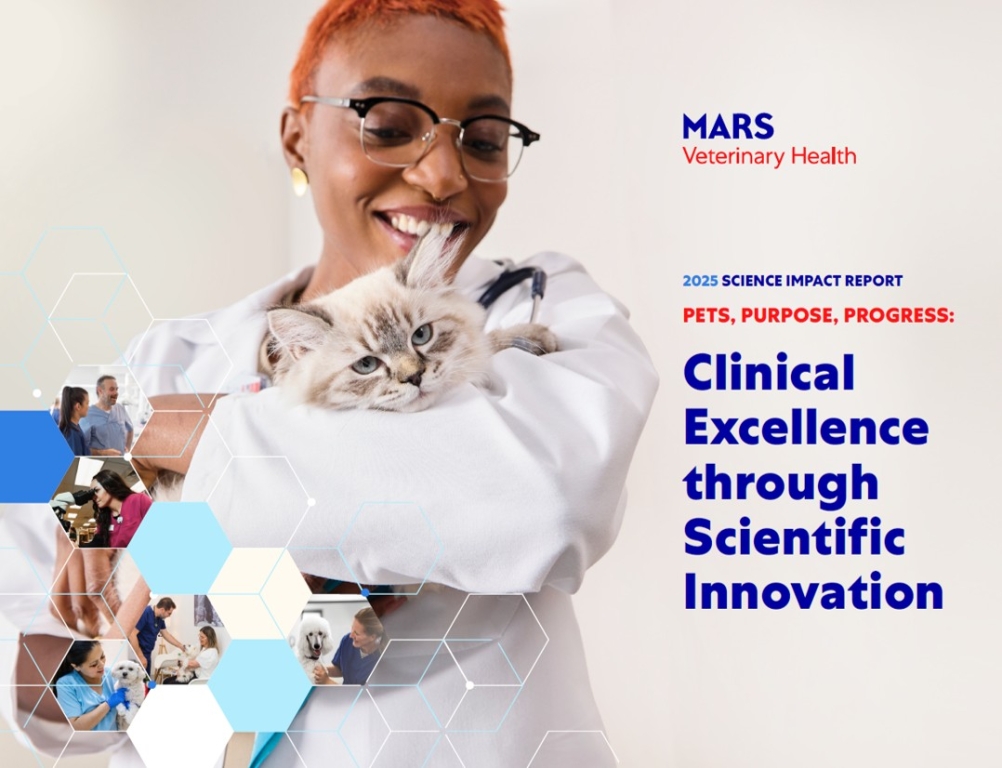
Mars Veterinary Health: 2025 Science Impact Report
Mars Veterinary Health Publishes 2025 Science Impact Report Highlighting Global Advances In Pet Health
 8 months ago
  1798 views
One of the world’s leading contributors of veterinary research details how its data-driven insights and global scientific advancements are shaping the future of veterinary medicine
Mars Veterinary Health has published its 2025 Science Impact Report – Pets, Purpose, Progress: Clinical Excellence through Scientific Innovation – a comprehensive annual review of the veterinary research and initiatives across its globally connected network that are advancing veterinary science and clinical excellence.
The new report highlights a year of accelerated veterinary science research across Mars Veterinary Health’s globally connected veterinary care network. In 2025, this included more than 500 peer-reviewed publications authored by its clinician scientists and global initiatives shaping the future of pet healthcare – from clinical research infrastructure and One Health breakthroughs to continued progress in sustainability science and new health outcomes tools.
“Our second annual Science Impact Report is more than a record of progress – it’s a blueprint for the future of veterinary care,” said Dottie Brown, DACVS, MS, DVM, VP of Science and Healthcare Innovation at Mars Veterinary Health and leader of its Medical Affairs Science Team. “By harnessing science, innovation, and sharing best practices, we are driving clinical excellence today while laying the foundation for a healthier, more sustainable future for generations of pets to come.”
Each year, clinician and technician scientists across Mars Veterinary Health leverage some of the industry’s most comprehensive datasets – sourced from anonymised data from millions of pets served across the global network every year – to conduct veterinary research and deliver actionable insights that elevate the standards of pet healthcare.
Report highlights include:
- Groundbreaking research across the spectrum of health conditions: Addressing pet health, from common to rare conditions, spanning oncology, neurology, anaesthesia, dermatology, infectious disease, machine-learning applications for clinical decision support, patient safety, and more.
- Global One Health progress for pets, people, and planet: Identifying a novel rabies variant in the U.S., detecting a human erythroparvovirus analogue in cats in Italy, studying mercury exposure and greenhouse gas emissions in veterinary practice—alongside new findings on waste anaesthetic gas, medical waste reduction, and pharmaceutical stewardship.
- MARS PETCARE BIOBANK™ fuels genetic discovery: Three years in, with more than 4,500 pets enrolled and counting, the study led to the genetic discovery of the SLAMF1 variant linked to canine atopic dermatitis – accelerating development of a new DNA test in collaboration with academic partners. Full genome data collected from the biobank is accessible from the National Center for Biotechnology Information (NCBI) Sequence Read Archive, which is set to become the world’s largest open-access collection of cat and dog genes.
- Unifying veterinary clinical research at scale: Building a globally integrated network of veterinary clinical trial sites – streamlining research processes and reducing operational barriers through a dynamic, robust, and thriving clinical trial ecosystem that accelerates discovery and expands access to transformative care.
- Pioneering pet health outcomes instruments: A groundbreaking initiative to systematically incorporate the pet owner’s perspective into clinical care and veterinary trials with rigorously validated Owner Reported Outcomes (OROs) – marking a significant step toward globally standardised assessment of pet well-being and treatment response.
- Driving more sustainable veterinary care: 200 tons of waste avoided in partnership with one of its largest distributors to scale a reusable shipping tote container programme to over 1,300 of its U.S. clinics in 12 months; three tons of plastic packaging waste collected for recycling in 12 months that would have otherwise gone to landfill.
- Improving access to care: Collaborative scoping review with Michigan State University established the first metrics and framework for Access to Veterinary Care (A2VC), enabling global research and policy development.
In caring for more than 10 million pets each year across dozens of countries, Mars Veterinary Health remains committed to advancing veterinary medicine for the long term through science and research in service of its Purpose: A BETTER WORLD FOR PETS.
The full 2025 Science Impact Report is available at: marsveterinary.com/veterinary-science/reports/2025.
More from Linnaeus Group

 22 hours ago