
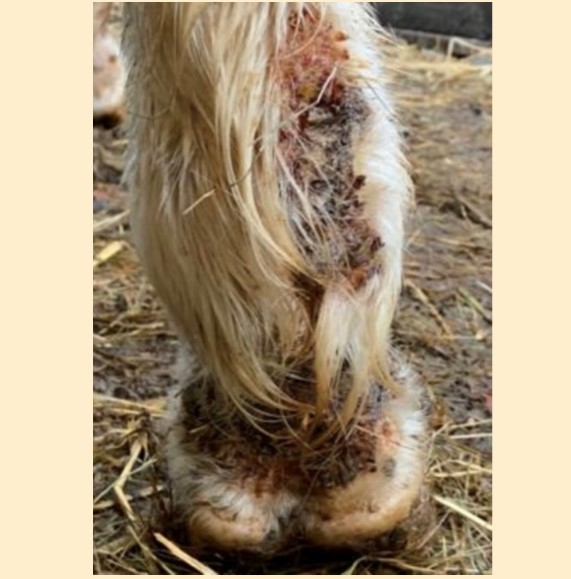
The research results could inform how to better manage and treat these common cases
CVS Equine Practices Undertake Collaborative Equine Pastern Dermatitis Study
 3 years ago
  1755 views
CVS Equine practices are undertaking a collaborative clinical study to gather further information about the clinical signs and aetiology of Equine Pastern Dermatitis.
It is expected that the results will help inform equine clinicians and owners how they can better treat and manage these cases in the future.
Equine pastern dermatitis (EPD) (also known as “mud fever”) is a common skin disease of the pasterns that can have several different underlying causes, including bacterial infection, parasite (mite) infestation, fungal infection (ringworm) and inflammation of the blood vessels in the skin (vasculitis). The disease can prove difficult to treat.
EPD is often associated with chronic wetting of the skin of the lower limbs from rain and mud. Cases tend to occur more often in winter and on white rather than pigmented limbs. The most frequent clinical signs include redness of the skin, hair loss, crusting and oozing of serum. The lesions are painful, and some horses may show lameness on the affected limb(s).
Despite being a common disease, very little research has been undertaken into EPD in the UK. In addition, numerous different treatments are currently used for EPD, for which there is not always robust scientific evidence.
Involving 20 practices, starting in 2022 and continuing into early 2024, samples have been collected from over 70 cases from horses that have been diagnosed by EPD throughout the UK.
Full blood profiles have been assessed, in addition to bacterial culture analysis of the lesions, PCR analysis for dermatophytes (ringworm fungi), microscopy for ectoparasites (mites) and skin cytology. An owner questionnaire has also been completed to gather information on EDP management, with supporting photographs taken. Each horse’s lesions have been graded and descriptive data relating to the lesions were recorded.
Data collection is now complete and a team of researchers, led by vet Manuela Diaz Ramos, has commenced analysis of the data. A full report on the findings, along with treatment and management recommendations, is expected to be presented at a scientific conference later this year.
Charlotte Sinclair, CVS Equine Development Lead, said: “Equine pastern dermatitis is such a common disease for horses and ponies in the UK. And with wetter weather becoming more prevalent, it’s only expected to increase.
“We want to be able to offer the best treatment and management advice for horses suffering this condition. But research into this condition has been sparse and the evidence-base for the range of treatments offered has been similarly lacking.
“Our 20 practices are therefore collaborating on a two year project, which will see us review and analyse over 70 equine cases. We really hope that our work will lead to significant improvements in treatment and preventative healthcare for horses prone to this painful disease.”
CVS Group operates across small animal, farm animal, equine, laboratories and crematoria, with over 500 veterinary practices, referral centres and sites in the UK, the Republic of Ireland and the Netherlands. In the last five years the company has invested nearly £80 million in its sites, facilities and equipment, in addition to industry leading training and support, to give the best possible care to animals.
More from CVS UK Ltd
- Regional CPR training project strengthens emergency preparedness across 30 veterinary practices
- Hillsborough Veterinary Referrals delivers life-saving transatrial stenting through multi-specialist collaboration
- CVS Equine launches new quality improvement project to advance equine asthma care
- Infection control project shows audit and team culture drive lasting change across 60 veterinary practices
- Collaborative project reduces antibiotic use across nine practices
