
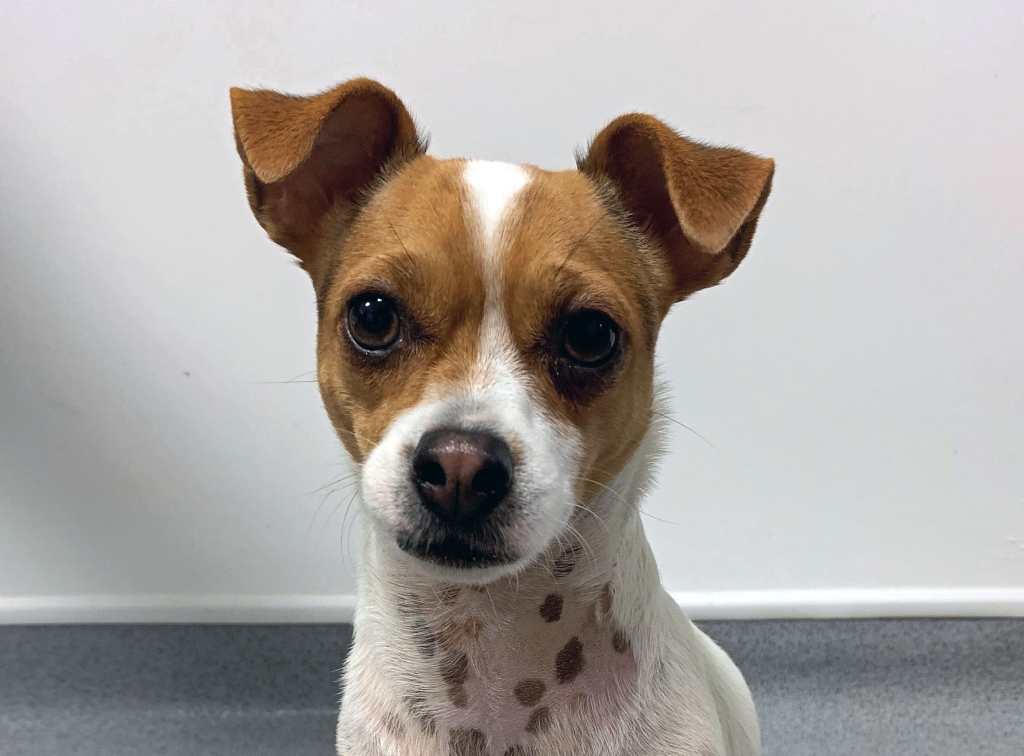
NDSR has seen a spike in dogs with secondary exposure to HRT.
Surrey Vets See Worrying Spike In Dogs Exposed To Human Hormonal Cream
 3 years ago
  1874 views
A Surrey animal hospital is reporting an alarming spike in the number of cases of dogs who have come into contact with hormonal cream containing oestrogen (HRT) for use by humans.
Since the start of the year, Linnaeus-owned North Downs Specialist Referrals (NDSR), in Bletchingley has diagnosed five dogs with secondary exposure to HRT.
HRT is widely used to relieve the symptoms of the menopause and applying it through a skin patch, gel or cream, instead of orally, are increasingly popular ways to administer it.
Gerry Polton, hospital director at NDSR, said: “According to the NHS, there has been a 35 per cent increase in the number of HRT items prescribed between 2020/21 to 2021/22.
“With the increasing use of HRT products we suspect secondary oestrogen exposure in pets may be occurring with increased frequency nationally.”
Recently, NDSR was presented with a three-year-old female neutered Jack Russell Terrier called Rosie who displayed typical symptoms of HRT secondary exposure, including increased sexual attractiveness to male dogs, vulval enlargement and hair loss.
Rosie’s owner, Sue Burgess, from Hove, said: “Rosie had been spayed in October 2021 with no complications, so we were mystified to see her apparent ‘season’.
“When we met with NDSR they revealed their suspicions which made complete sense to us. I had started Gel HRT about six weeks before Rosie showed symptoms.
“Since the change in my HRT routine we have seen a very slow change in Rosie. She does not ‘attract’ the males now, her vulva is slowly reducing, and she is fussing less.”
Gerry added: “Secondary HRT exposure to animals typically occurs through exposure to gels and creams applied to their owners' forearms, a recommended site of application according to product data sheets.
“We would urge dog owners using HRT in this manner to be aware of the possibility of secondary exposure to their pets. It is thought that this most commonly occurs by skin-to-skin contact, perhaps most likely through the less haired areas of pets, like the belly.
“Most cases of secondary oestrogen exposure can be treated simply, by ensuring no further contact with the oestrogen source, in which case exposure signs should disappear within months, albeit hair regrowth may take up to six months.
“It is, however, important to be aware that more serious adverse events, such as bone marrow suppression, can be seen with oestrogen exposure, which may be irreversible and ultimately fatal. Fortunately, we have yet to see this as a result of secondary exposure to HRT products at NDSR though.”
NDSR offers specialist-led services in anaesthesia and analgesia, cardiology, dentistry, dermatology, diagnostic imaging, internal medicine, neurology, oncology, ophthalmology, orthopaedics, soft tissue surgery and spinal surgery.
For more information, visit https://www.ndsr.co.uk or search for North Downs Specialist Referrals on social media.
More from Linnaeus Group
- Mars Veterinary Health publishes 2025 Science Impact Report highlighting global advances in pet health
- AMVS specialist gets to heart of puppy's problem
- Garston Veterinary Group team earn BVRA recognition
- Chihuahua Lola loving life after 'challenging' spinal surgery
- Vets save therapy cat's life following road accident
