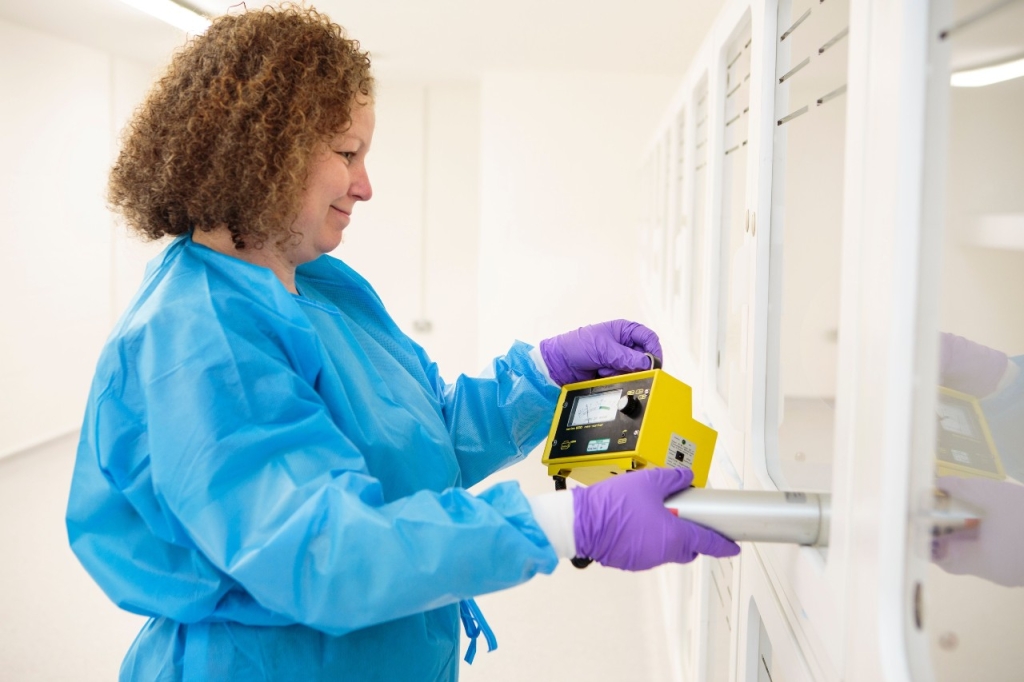
Veterinary nurse Lou Gower, who manages the Anderson Moores feline hyperthyroid clinic
Cutting-edge Radioactive Therapy Proves Lifesaving For Cats
 4 years ago
  1658 views
A UK animal hospital is enjoying a remarkable success rate of more than 95 per cent with its radioactive iodine treatment for cats suffering from an overactive thyroid gland (hyperthyroidism).
Linnaeus-owned Anderson Moores, in Winchester, Hampshire, is one of the very few veterinary hospitals in the south of England to offer a specific, specialist-led feline hyperthyroid clinic (FHC).
An overactive thyroid is a common disorder in middle aged and older cats, of which easy-to-spot symptoms can include increased appetite, weight loss and hyperactivity.
Left untreated, the clinical signs can be quite dramatic, however, most cats will respond well to treatment.
Veterinary nurse Lou Gower, says the innovative radioactive iodine (RAI) therapy offered at Anderson Moores has proved to be transformative for its feline patients, extending the lives of cats stricken by the common disease.
Lou, who manages the Anderson Moores FHC, explained: “It’s extremely rewarding being able to offer such an effective and high standard of care which enables so many of our cat patients to live longer, healthier and happier lives.
“Radioactive iodine really is the ‘gold standard treatment’ for feline hyperthyroid cases and provides a definitive, one-off treatment with a cure rate of about 95 per cent.
“It doesn’t involve the anaesthetic or surgical risks associated with surgery and avoids potential side-effects from long-term medication.
“The treatment process involves a small amount of radioactive iodine being injected in the scruff of the neck, just like a vaccination would be.
“The radioactive iodine is taken in by the overactive thyroid tissue and emits radiation to destroy the abnormal tissue, while sparing all the other organs.
“After a short period of hospitalisation in our specialist clinic, usually between nine and 13 days, and a further couple of weeks of simple precautions at home, the cats can return to normal daily life.
“As someone who has always been a cat-lover, I feel very lucky to be working with our patients on a daily basis, especially in such a positive manner with a such a good rate of success for improving their long-term quality of life.”
Anderson Moores hospital director David Walker added: “Our feline hyperthyroid clinic is one of a small number of dedicated clinics in the south of England.
“We are well established now, having run the service since 2016, and the clinic is led by a team of European, American and Royal College recognised specialists in internal medicine, with the assistance of a dedicated group of feline veterinary nurses such as Lou.
“Our FHC uses established and recognised screening methods and after just one treatment, cats should quickly experience a much-improved quality of life.
“Radioactive iodine treatment may also represent better value compared to lifelong medication and regular monitoring, so it really is a tremendous treatment on so many levels.”
For more information about Anderson Moores’ FHC, go to www.andersonmoores.com/feline-hyperthyroid-clinic/.
Cat owners and vets who think they have a case suitable for radioactive iodine treatment, or wish to assess its suitability, should email the team at [email protected] or call 01962 767920.
More from Linnaeus Group
- Mars Veterinary Health publishes 2025 Science Impact Report highlighting global advances in pet health
- AMVS specialist gets to heart of puppy's problem
- Garston Veterinary Group team earn BVRA recognition
- Chihuahua Lola loving life after 'challenging' spinal surgery
- Vets save therapy cat's life following road accident
